2026-10-04 · 7 min · By Alcott Dube
How to build a scalable css architecture with cascade layers
I organise styles around shared tokens, explicit cascade layers and narrowly scoped utilities, so routine changes don't turn into contests over selector specificity.
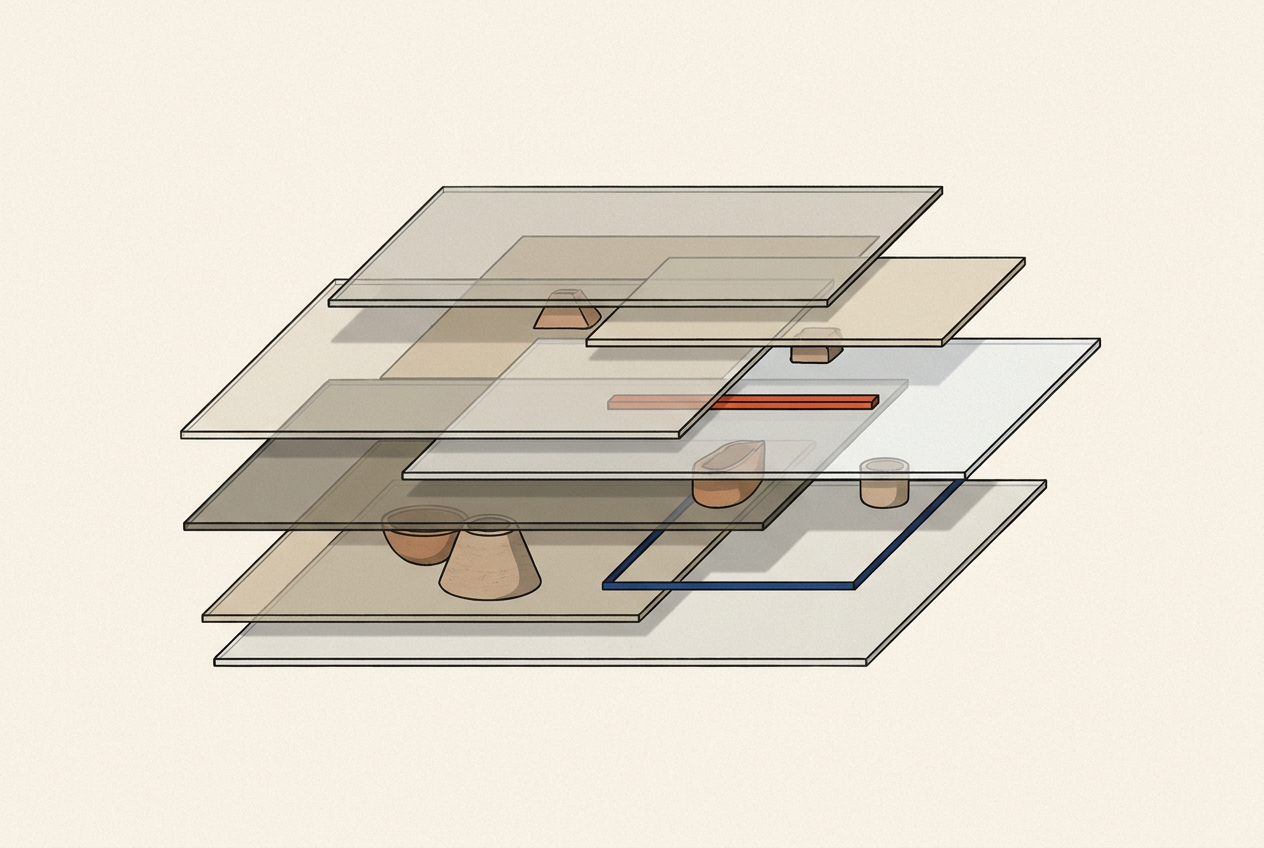
I build a scalable css architecture by separating shared design tokens, base styles, components and utilities, then declaring their precedence with cascade layers. Components own their appearance, layout rules own placement, and utilities provide deliberate overrides without escalating selector specificity.
How to audit css before changing the architecture
I start with a representative screen, not a new folder structure. A settings page with inputs, buttons, validation and a dialog exposes more useful problems than an isolated card. I inspect the winning declarations in browser developer tools and trace each unexpected override to its source.
I look for three failure modes: selectors tied to page structure, repeated values that should express one decision, and exceptions whose precedence depends on import order. A selector such as `.settings .panel form button` mixes location with appearance. Moving that button should not change its border or padding.
Before changing anything, I record a small baseline: specificity warnings, declarations marked important and duplicated component rules. These are maintenance signals, not quality scores. I also save screenshots of the screen's key states. The first migration should make the styles easier to reason about without quietly changing the interface.
How to organise css design tokens
I separate raw values from their purpose. A primitive token might be `--blue-700`; a semantic token might be `--colour-action`, which references it. Components generally consume the semantic name. Mozilla's documentation on custom properties explains the mechanism: ordinary custom properties participate in the cascade and inherit, so their values can change with context.
I keep the initial vocabulary small: text and surface colours, spacing, type sizes, radii and a few structural dimensions. A spacing scale could start at 4, 8, 12, 16, 24 and 32 pixels. That is a proposed scale, not a universal rule. I choose values that fit the interface, rather than rounding every existing measurement into a fashionable system.
Not every literal needs a token. A one-off decorative offset can stay local. I add a shared token when several consumers should change together, not simply because a value appears twice. For themes, I redefine semantic tokens on a theme container. I introduce component-specific tokens only when a component needs a stable customisation point.

How to set up css cascade layers
I declare the order once, near the start of the stylesheet entry point: `@layer reset, vendor, tokens, base, layout, components, utilities;`. Within ordinary author stylesheet declarations, later layers take precedence over earlier ones before selector specificity is compared. That gives a utility a predictable way to override component styling without a longer selector.
Mozilla's layer reference and Smashing Magazine's introduction both explain the trap I check first: normal unlayered rules outrank normal rules in every named layer. Wrapping new components while leaving old global styles unlayered can therefore make the migration harder. I either move those styles into a declared layer or explicitly contain them as temporary migration work.
I also check declarations marked important, because their layer precedence runs in reverse. Layers aren't a replacement for understanding the cascade. For external styles, `@import url("vendor.css") layer(vendor);` assigns them to a layer when the import is validly placed before style rules. I inspect the built stylesheet to confirm that tooling preserves these boundaries.
How to separate component styles from layout
I let a component own its typography, padding, border, surface and internal arrangement. The surrounding layout owns its placement, available width and spacing from siblings. A card can have internal padding, but I avoid giving every card a bottom margin. The parent can use `gap`, which doesn't leave a trailing margin to undo.
I favour single-class selectors such as `.card` and `.card__title`, with explicit variants for meaningful differences. The naming convention matters less than its consistency. I don't encode a route or several ancestors into a component selector unless that context is genuinely part of the component's contract. A sidebar location isn't automatically a visual variant.
States need the same discipline. I style native disabled controls through their actual disabled state, rather than a class that only makes them look unavailable. For custom controls, I keep styling aligned with behaviour and accessibility semantics. Colour alone cannot turn a clickable element into a correctly disabled control.
Where utility classes belong in css architecture
I put utilities after components when I want an explicit class in the markup to win over an ordinary component declaration. Good candidates have a narrow job: visually hiding content accessibly, removing a margin, or setting a text alignment. Their names should describe the operation, and each should have a clear reason to exist.
I distinguish a one-property utility from a reusable layout primitive. A `.stack` class that arranges children and applies a gap belongs in my layout layer. A `.text-centre` class belongs in utilities. This keeps structural arrangements separate from last-mile overrides, even though both appear as classes in markup.
The failure mode is an override vocabulary that becomes a second component system. If the same bundle of six utilities appears on every warning panel, I would move that repeated visual decision into a component. I don't use a fixed class-count threshold; I look for combinations that need to change together.
How to organise css files and enforce boundaries
My entry point establishes layer order and brings in the stylesheets. I usually separate tokens, base rules, layout primitives, components and utilities into recognisable locations. File boundaries help people find code; layer boundaries decide precedence. I don't assume that a tidy directory tree creates a predictable cascade, because the browser never sees those directories as architectural rules.
For locally scoped component styles, including css modules, I keep the same ownership rules. Generated class names reduce naming collisions, but they don't decide which element owns spacing or how themes work. If the framework supports layers, I place component rules in the component layer and verify the emitted output, including styles loaded with later routes.
I configure Stylelint to flag accidental specificity growth, duplicate selectors and unapproved important declarations. I also document where new rules belong with three short examples: a token change, a component variant and a utility. A small, enforceable convention is more useful than a long document that reviewers cannot apply consistently.
How to migrate existing css without a full rewrite
I migrate one bounded feature first. I establish layer order, assign its existing rules deliberately, then replace repeated design decisions with tokens. I avoid combining a visual redesign with this work. Otherwise, a changed screenshot could mean an intended design change, a broken selector or an unexpected cascade winner.
I test narrow and wide layouts, keyboard focus, validation errors, disabled states and long content. If themes exist, I test each one. The highest-risk checks are often contextual: a component inside a dialog, a nested theme, or a route that loads another stylesheet. Those combinations expose assumptions that an isolated component preview misses.
After migration, I compare the baseline and inspect any new overrides. I want fewer context-dependent selectors and an understandable reason for every exception, not merely fewer lines. I delete superseded rules as each feature moves across. If an old stylesheet must remain unlayered temporarily, I give its removal a named owner and a specific follow-up task.
Questions people ask
Do cascade layers replace specificity?
No. I use layers to establish precedence between groups of rules. Specificity still resolves competing selectors within the winning layer, assuming the other relevant cascade conditions are equal.
Should every css value be a design token?
No. I tokenise decisions that should stay consistent or change together. A local decorative adjustment can remain a literal value without weakening the architecture.
Can I use utility classes with component css?
Yes. I use components for recurring visual patterns and utilities for narrow, explicit adjustments. Placing utilities later in the declared layer order makes ordinary overrides predictable.
Why isn't my cascade layer overriding existing styles?
I first check whether the winning rule is unlayered, because normal unlayered declarations outrank normal layered declarations. Then I check inline styles, important declarations and the actual layer order in the compiled stylesheet.